




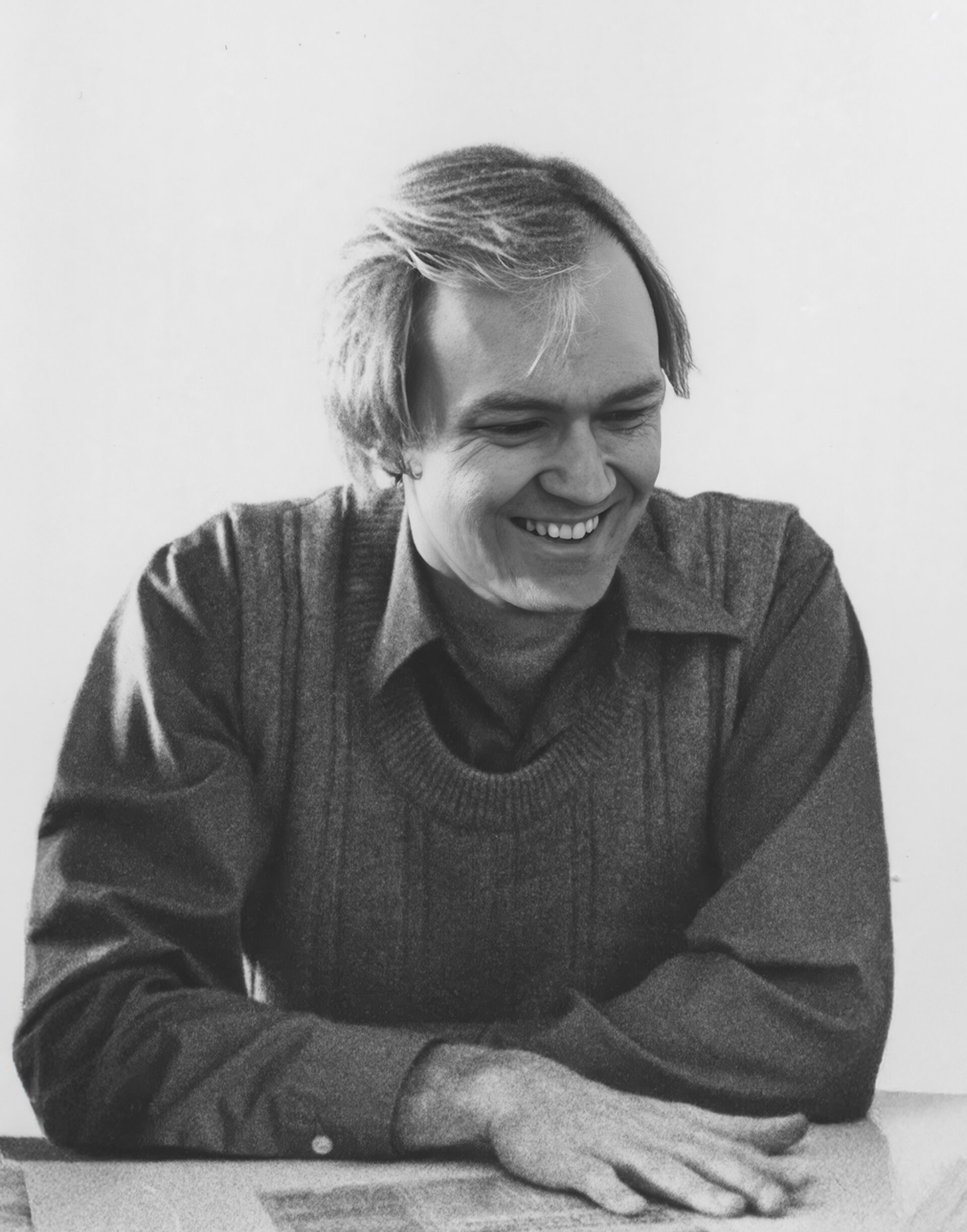
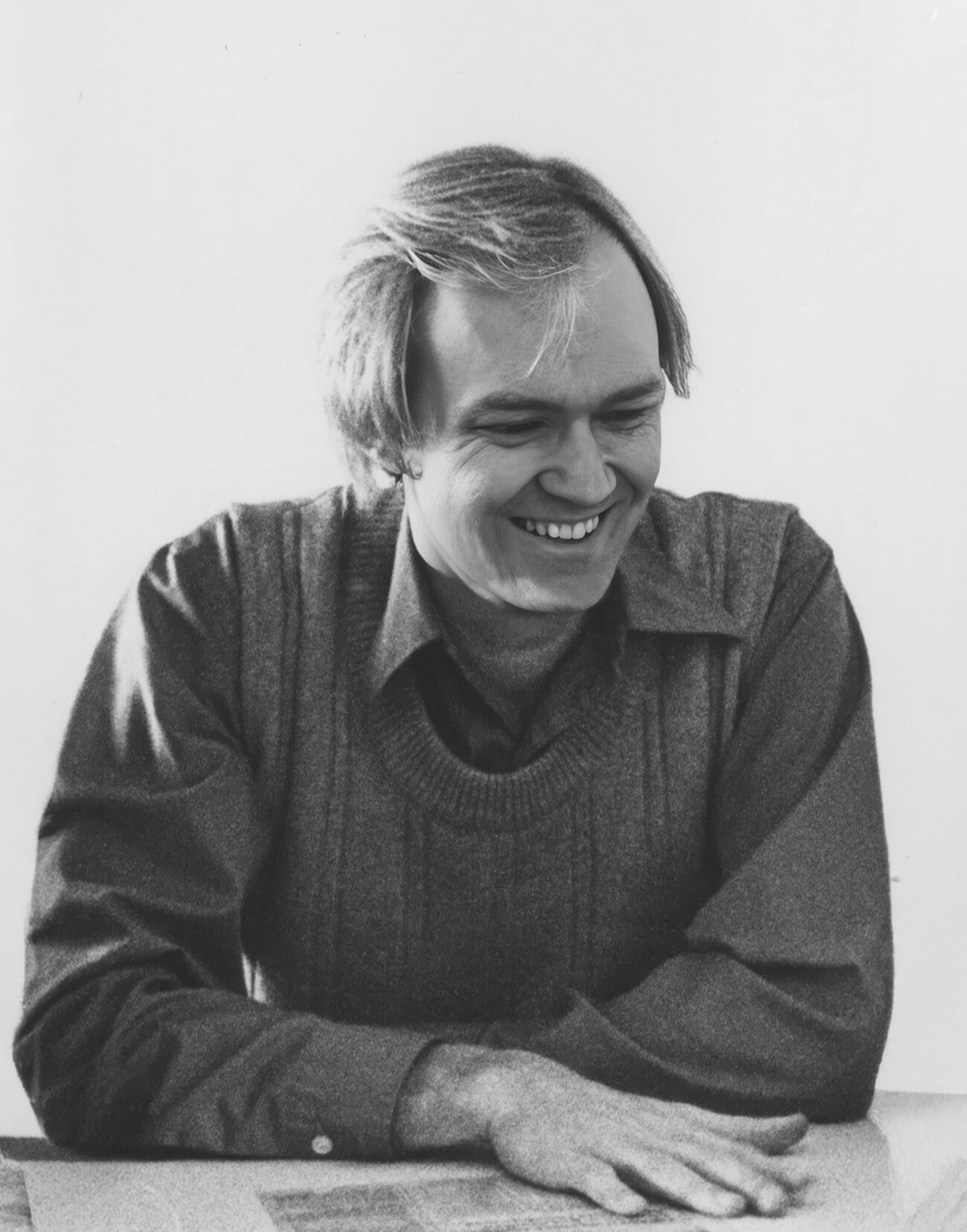
Profile: TT
Born: April 19, 1942
Location: Tallinn, Estonia
Education:
University of Michigan, Ann Arbor, Michigan (1961—1962)
Western Michigan University, Kalamazoo, Michigan (1963—1966)
Studios:
Steller Engineering, Detroit, Michigan (1963)
Koltanbar Engineering, Clawson, Michigan (1963—1967)
Ad-Art Design, Kalamazoo, Michigan (1965—1966)
Design Research Center, Western Michigan University (1966—1967)
Solar Engineering Corp, Detroit (1967—1968)
John Birdsall & Associates, Los Angeles, California (1968—1969)
Unispace Engineering Corp, Los Angeles, California (1969)
Westburg-Klaus Associates, Minneapolis, Minnesota (1969—1970)
Freelance Designer, Warren, Michigan (1970—1971)
Gottschalk+Ash, Toronto (1971—1985)
Telmet Design Associates, Toronto (1985—2024)
Achievements:
International Typographic Composition Association, Award of Excellence (1973)
International Typographic Composition Association, 2 X Awards of Excellence (1974)
Graphic Designers of Canada (GDC), Past President, Director, Treasurer, Member (1975—2025)
Graphic Designers of Canada (GDC), Fellowship (1987)
Association of Registered Graphic Designers (RGD), a Founder, Emeritus Member (1996—2025)
ICOGRADA, Excellence Award (1996)
AGI, Alliance Graphique Internationale, Member (1998)
Western Michigan University, Art Alumni Academy (2002)
Communication Designers of Toronto (CDOT), Honorary Member (2009)
Biography
Tiit Telmet’s life in design traced the arc of modern Canadian practice. From the foundational International Style of the 1960s, through the digital revolution, to the complex, multidisciplinary projects of the 21st century. Tiit was a steadfast and highly skilled practitioner. His journey, which in Canada began in the apartment-based studio of a young Stuart Ash, spanned more than five decades, and was defined by a profound belief in craft, collaboration, and resolution. Telmet embodied the quiet, competent ethos of a generation that built the systems and standards upon which Canadian design stands, preferring the substance of the work to the fanfare of its reception.
Born in war-torn Tallinn, Estonia, in 1942, Tiit’s early life was shaped by displacement and rebuilding. In 1944, his family fled the Soviet occupation, spending several years in Germany before immigrating to the United States in 1950 and settling in Detroit, Michigan. That experience of crossing borders and reconstructing identity quietly informed his belief that design, at its best, is a universal language — capable of clarity and meaning beyond words.
Tiit initially studied architecture at the University of Michigan, later shifting to graphic design at Western Michigan University, where he encountered a rigorous modernist approach to problem-solving and production. This experience proved formative not for a specific aesthetic doctrine, but for a philosophical one, instilled by his instructor, Jon Henderson. Henderson emphasized disciplined process, critical refinement, and the responsibility to fully resolve an idea before considering it complete. “You’re better off to have three to five resolved pieces than 20 pieces of unresolved work,” Telmet recalled. “Resolved meant that you worked them, and you worked them, you fine-tuned them until they were perfect solutions.” This commitment to resolution became his lifelong compass.
After graduating in 1966, and following a brief period working with Henderson at Western’s Design Research Centre, Tiit moved to Los Angeles, seeking experience in a demanding professional environment far from home, where he gained exposure to both corporate and technical design work. He later returned to the Midwest, with the encouragement of Jon Henderson, to join Westburg-Klaus Associates in Minneapolis, a move that proved pivotal when a chance discovery of the European design journal Graphis (Issue 148, Volume 26, 1970) redirected his career. The issue featured an extensive profile of the groundbreaking firm Gottschalk+Ash.
“I told myself I wanted to work for those guys,” he recalled. In 1971, he travelled to Toronto, staying with his godmother, and contacted Stuart Ash directly, who had just relocated from Montréal and was quite literally establishing G+A’s new Toronto office. At the time, Telmet had already been offered a secure $12,000-a-year position with a corporate architecture firm in the city, but he recognized the creative potential of working at G+A. Ash initially offered him part-time work at $5 an hour. “So I jumped on it.” He became the firm’s first Toronto employee, working out of Ash’s one-bedroom apartment at 50 Prince Arthur Avenue. That arrangement quickly evolved into full-time employment, and the beginning of a fourteen-year partnership that would help define Canadian design throughout the 1970s and early 1980s. When the staff grew to three or four, they respectfully suggested to Ash that he would need to find a new apartment so the business could continue to grow.
At G+A Toronto, Telmet found his milieu. He was fast, accurate, and deeply craft-oriented in an era of hand-cut rubylith and paste-up. More importantly, he thrived in the collaborative, team-based culture the firm fostered. “Everybody in the Toronto design community wanted to work at Gottschalk+Ash in the ’70s and ’80s,” he recalled. “We were such a tight, cohesive group that nobody ever wanted to leave. If someone had to work on the weekend, everybody would want to come in and help.” Every Friday afternoon, the studio held critique sessions over a bottle of wine or beer. “We would discuss the work we were doing and see if anyone needed weekend support.” The pointed critiques, sometimes punctuated by Fritz Gottschalk arriving from Montréal to lambaste, “That’s shit! What are you people doing?,” forged exceptional work. “There were no egos and everything was a group effort. The firm was always greater than the names on the door.”
This collaborative spirit was reinforced by a partners’ bonus pool shared between the Toronto and Montréal offices. “We didn’t pay the highest salaries, but at the end of the year we would divvy up bonuses… It was a good incentive,” Telmet explained. It was a structure that rewarded hard work and loyalty. Tiit moved fluidly across roles: designer, production coordinator, client liaison, staff manager, and eventually partner. He fell into a comfortable working relationship with Ash. “We complemented each other,” said Telmet. “I learned a lot from his business acumen and he had a lot of trust in my abilities as a designer and manager.” Together, they insisted on presenting only fully realized concepts. Ash, in particular, was a fierce advocate for strong work. Telmet recalled a client wavering between colour options for a business card, suggesting he should show them to his wife. “Stuart got up and said, ‘This is your business card. Does your wife dress you in the morning?’ The client looked up and said, ‘OK, I’ll take this one.’”
Among the firm’s many projects, the early poster series for the St. Lawrence Centre for the Arts remains a landmark: playful, abstract compositions built from bold graphic forms and precise Letraset typography, entirely constructed by hand through layered artwork and overlays. The series was later recognized by Communication Arts as among the strongest poster designs of its era.
Tiit also played a central role in implementing the full visual system for Claude Neon, translating Freddie Jaggi’s symbol and colour concepts into a comprehensive, real-world identity program. This meant developing dozens of logo and colour variations and overseeing their application across vehicles, billboards, and industrial facilities. In an era before digital layouts or site photography databases, Tiit travelled directly to company yards, photographing trucks and structures, measuring surfaces by hand, and calculating optimal sizes to minimize the need for multiple versions. What emerged was not simply a logo rollout, but a carefully engineered system, one that balanced consistency with the practical realities of fabrication and installation.
Tiit also worked exclusively on the identity, packaging, and point-of-sale program for the antihistamine Tavist, produced by Anca Laboratories. The project was groundbreaking in its departure from conventional pharmaceutical packaging of the period, most notably through its use of metallic silver ink and a distinctive square format that immediately set the product apart on shelf. The identity was carried consistently across cartons, blister packs, and specially fabricated retail displays, reinforcing brand recognition in busy pharmacy environments. More than a graphic exercise, the Tavist program required close coordination with printers and display fabricators, balancing bold visual impact with the practical constraints of mass production and regulatory packaging standards. It stands as an early example of Tiit’s ability to integrate identity, structure, and retail experience into a cohesive, highly controlled system.
In 1985, looking for independence, Telmet established his own practice, where his work spanned identity systems, signage, postage stamps, and publications, often for educational institutions, cultural organizations, and professional associations.
But it was through Canada Post that Tiit reached perhaps his widest audience. Over four decades, he designed more than 90 Canadian postage stamps, small-format compositions that demanded absolute precision and conceptual restraint. He often reminded younger designers that stamps were not book covers: if an idea did not read at actual finished scale, it did not work.
Among his most celebrated stamps was the Oscar Peterson commemorative issue, a project he considered one of his personal high points: elegant, restrained, and deeply respectful of its subject. He also led ambitious multi-year series on historic vehicles and aircraft, pioneering early digital illustration workflows using Aldus FreeHand long before vector-based design became standard practice.
In his later years, Telmet became especially known for his expertise in signage and wayfinding systems, where architectural understanding, typographic clarity, and production knowledge intersect. During this period, he often collaborated closely with another former G+A staffer, Stephen Candib. While they maintained independent practices, they worked together as trusted partners on select projects, combining complementary strengths. Telmet continued to serve a small number of long-term clients and enjoyed the financial stability built from a career of diligent work. One of his standout projects was a comprehensive signage system for the Pratt Library at the University of Toronto, where he elegantly, and bravely, paired Bickham Script with DIN on etched glass, a solution that was both functional and quietly poetic.
Tiit Telmet’s legacy is not a singular, iconic logo, but a pervasive philosophy of careful craft and collaborative effort. He was a key node in the network that connected the European modernist influx of the 1960s to the mature, professionalized Canadian design industry of today. “We were a driving force in Canadian design,” he said. “We were renowned and awarded internationally. The proof is, a lot of the work we did 30, 40 or 50 years ago is still strong today.” He believed in the work, in the team, and in the quiet satisfaction of a job done to its fullest potential.
Parallel to his studio work, Tiit was deeply committed to the profession itself. He served for many years in leadership roles with both the Society of Graphic Designers of Canada (GDC) and the Registered Graphic Designers of Ontario (RGD), including as president and vice-president at various points.
He was instrumental in advocating for the recognition of graphic design as a professional service rather than a taxable manufacturing activity, spending considerable time in Ottawa working with federal agencies on policy reform. He also played a key role in early efforts to formalize professional registration for designers in Ontario.
Honours followed, though he rarely spoke of them. What mattered far more to him was sustaining a professional culture that valued craft, ethics, and mentorship. He was never interested in self-promotion: awards were placed in drawers, credit was shared, and younger designers were encouraged to submit work in their own names. As he reflected on the collaborative golden age at G+A, his words served as a fitting epitaph for his own approach: “Everybody had great pride in what they were doing. We didn’t do it to win awards, but to solve clients’ problems. At the same time, we had the opportunity to do something exceptional.”
Throughout his career, Tiit remained guided by a principle instilled by one of his earliest design mentors: that good design must be resolved — not rushed, not flashy, but worked, refined, questioned, and understood.
Tiit Telmet passed away on January 15, 2025, leaving behind an extraordinary legacy of work, mentorship, and professional stewardship. His influence is visible not only in archives and museums, but in streetscapes, libraries, envelopes, and in the careers of countless Canadian designers who absorbed. directly or indirectly, his belief in thoughtful, collaborative, resolved design.
With Thanks
Tiit Telmet and Kaja Telmet For support, co-operation, conversations, donations, and friendship.