




Archive: CM381
Artifact Type: Softback Booklet
Title: Expo 67 Children
Year: 1967
Designer: Heiner Hegemann
Studio: Heiner Hegemann
Client: Tundra Books, Les Editions Toundra
Size: 130mm X 96mm
Condition: Very Good
Collection: Canada Modern Archive
Artifact Type: Softback Booklet
Title: Expo 67 Children
Year: 1967
Designer: Heiner Hegemann
Studio: Heiner Hegemann
Client: Tundra Books, Les Editions Toundra
Size: 130mm X 96mm
Condition: Very Good
Collection: Canada Modern Archive
To coincide with Expo 67, Tundra Books produced a set of six pocket-sized guides, each devoted to a specific theme: Art, Boutiques, Films, Habitat, Sculpture, and this edition, Children.
Authored by Feenie Ziner, an established children’s writer, the booklet is grounded in lived experience rather than institutional voice. As the introduction notes, Ziner was the mother of five children, including triplets, and her advice is neither lofty nor sentimental. Instead, it acknowledges a truth often absent from official narratives of modernity: that families are messy, tired, curious, and eager for shared enjoyment. Ziner’s selections of pavilions and activities are framed not around prestige or novelty alone, but around what might genuinely ‘widen the eyes of children with pleasure,’ while also allowing parents to enjoy themselves — a small but telling social ideal embedded in Expo’s broader optimism.
Visually and materially, Expo 67 for Children aligns with the modest, accessible design language of other Toundra publications produced for the fair. Portable, approachable, and meant to be handled rather than preserved, it embodies the democratizing spirit of Expo’s educational ambitions. It helps complete a picture of Expo not just as a showcase of nations and technologies, but as a carefully staged environment for everyday people, families included, negotiating modern life together. In that sense, this small booklet is a reminder that Expo’s vision of the future was not only monumental and architectural, but also domestic, emotional, and profoundly human.
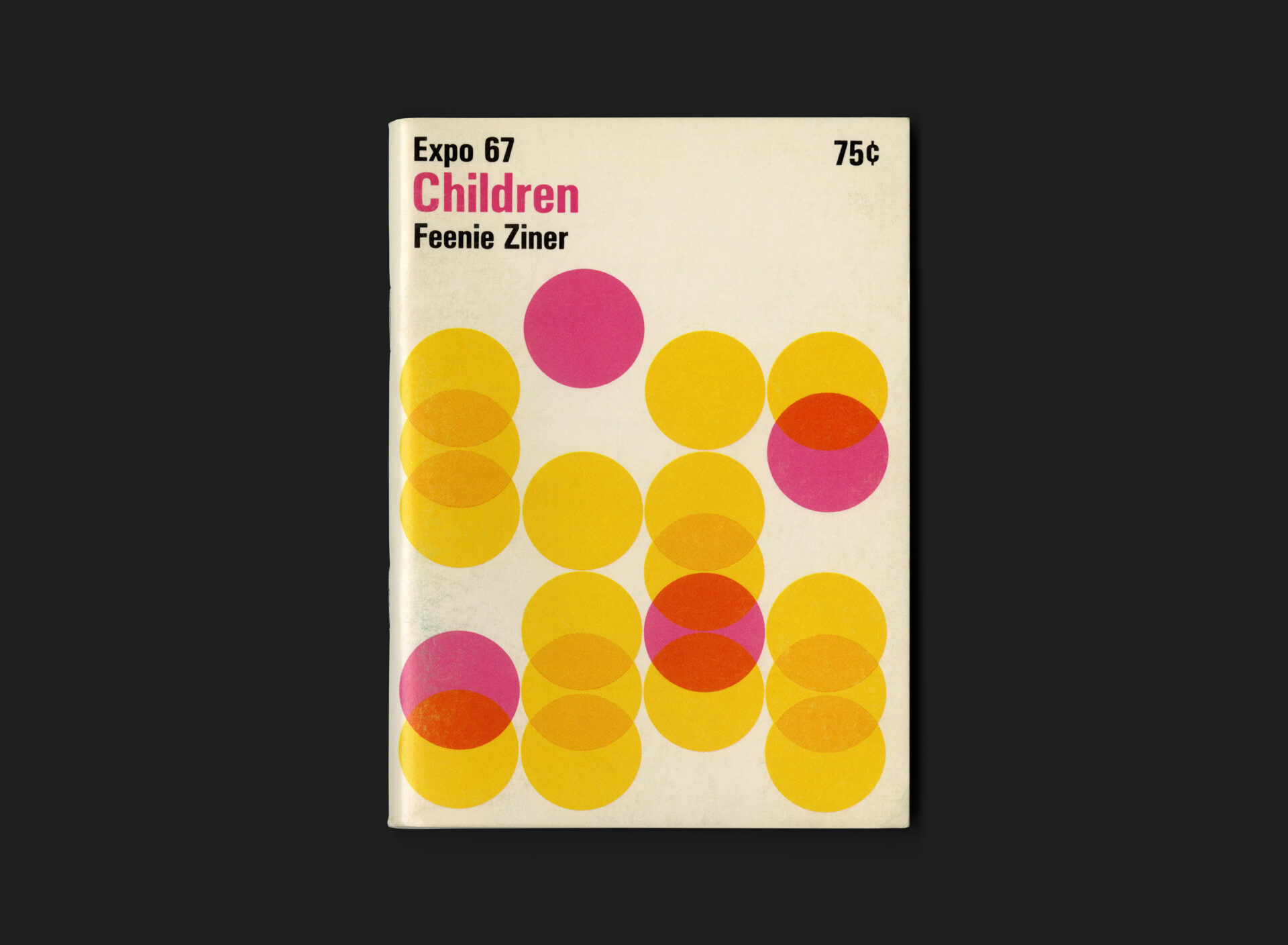
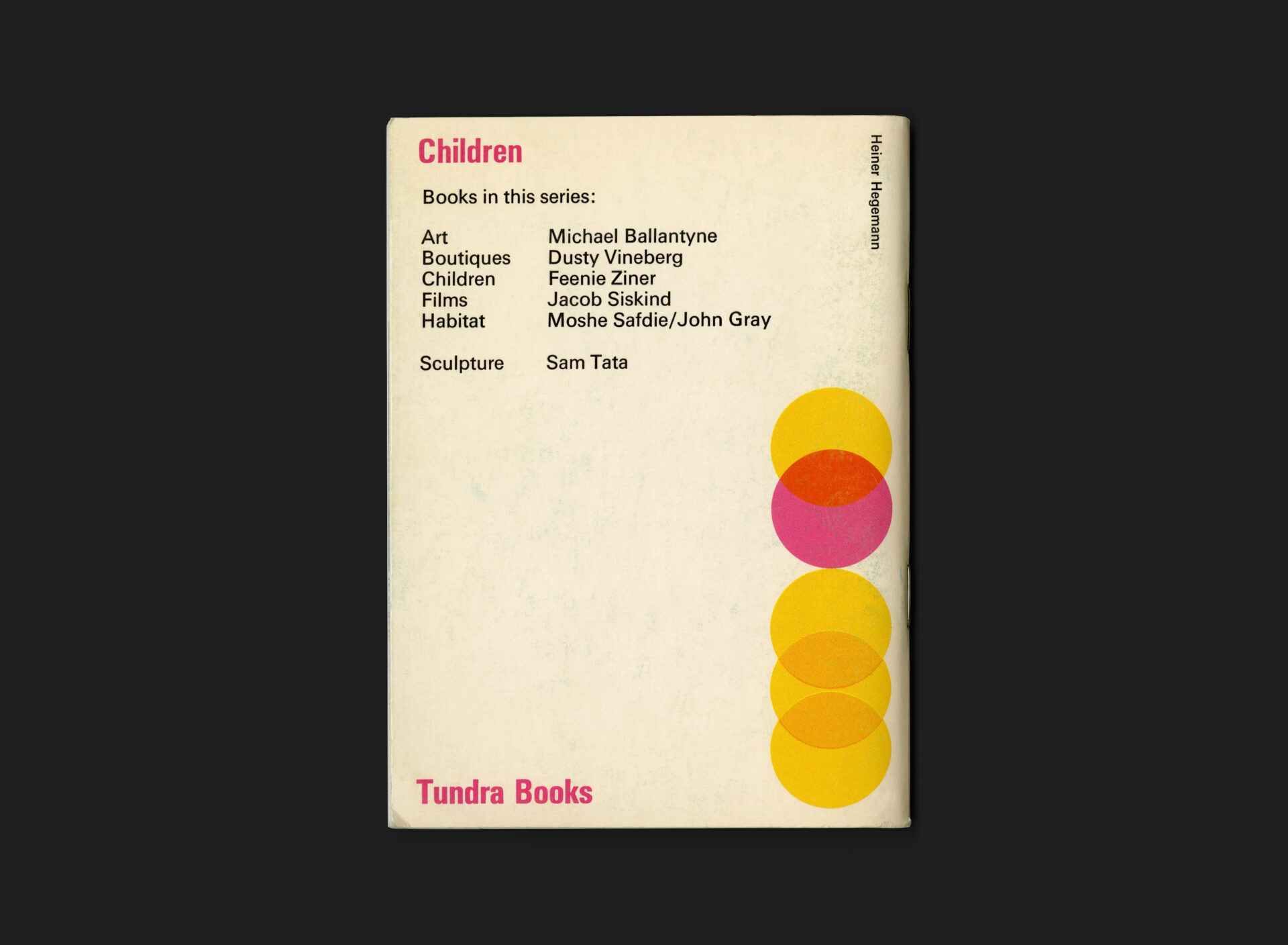
The series was designed by Heiner Hegemann, who soon after left Canada to join Chermayeff & Geismar in New York. Each booklet follows a consistent format, with abstract geometric compositions occupying the lower three-quarters of the cover and colour-coded titling positioned above. This edition features an arrangement of yellow and magenta circles on a yellow field, with areas of overprinting creating deeper secondary hues. A vertical column of circles runs along the right edge of the back cover, reinforcing continuity across the series. Inside, the booklet is printed in black and white, with content that is largely text-based and punctuated by select images.